Innovation in Instrumentation


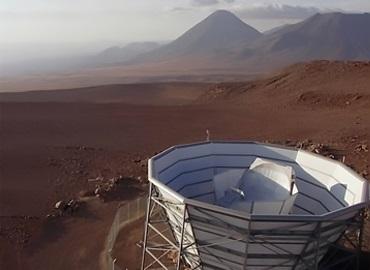
New developments in technology have always driven breakthroughs in our understanding of the Universe. And the Dunlap Institute is ensuring continued discoveries through the conception, design and development of innovative instrumentation projects.

For two and a half centuries after Galileo first turned a telescope to the sky, astronomers studied the objects they saw with nothing more than their eyes. Then, in the 1800s, they increased the light-gathering power of their telescopes with cameras, and began unravelling the light of stars by passing it through prisms.

Today, instead of photographic plates and film, detectors capture the light gathered by telescopes. Integral-field spectrographs reveal the composition, temperature and motion of astronomical objects. Computers sift through the data to reveal minute phenomena.

Combined with the next generation of large Earth-based and space telescopes, and revolutionary technologies like adaptive optics, instruments developed by the Dunlap and our partners will lead to discoveries that span the depths of the Universe—from our Solar System, to the stars and nebulae of the Milky Way Galaxy, to the galaxies beyond, and to the beginning of time.

read more

Research


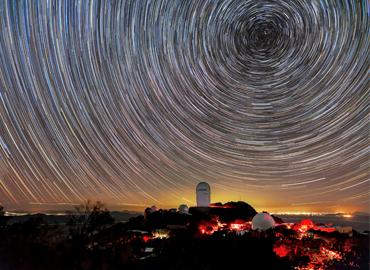
The Dunlap Institute’s faculty, postdoctoral fellows and students are making discoveries that span the depths of the Universe–in collaboration with astronomers from around the world, and working with the most advanced telescopes on Earth and in space.

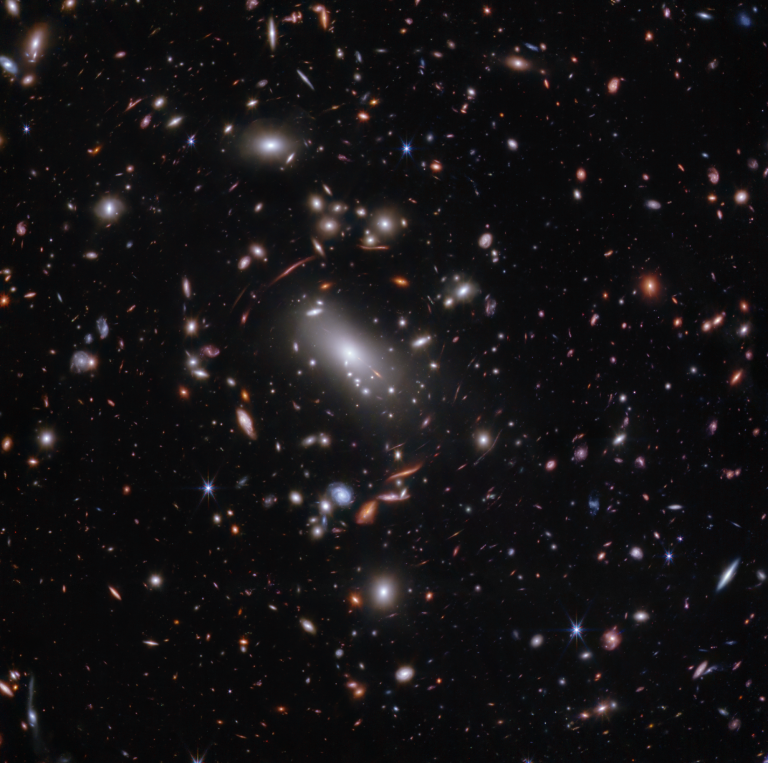
They are discovering planets outside our Solar System, studying dark matter and its relation to the evolution of galaxies and clusters of galaxies, and discovering distant objects at the edge of the visible universe.

read more

Education


Training the Next Generation of Astronomers

In addition to developing new techniques for discovering the Universe, the Dunlap Institute is producing the next generation of astronomers.

We achieve this through a variety of programs: the Dunlap Fellowship Program, graduate student scholarships, Instrumentation School, and Summer Student Program.

By training our faculty, staff and postdoctoral fellows in the latest pedagogical techniques, we aim to produce the highest calibre of students who will lead the teams that will solve the instrumentation and observational challenges of tomorrow. We also provide innovative training programs to astronomers around the world to help them solve major challenges in astronomical instrumentation.


Dunlap Institute graduate student Max Millar-Blanchaer prepares to test an optical component of the Gemini Planet Imager.

read more

Outreach


In 1921, David Dunlap, a retired lawyer and industrialist with a passion for astronomy, attended a public lecture on comets.

The talk was being given by Clarence Chant who had established the Department of Astronomy at the University of Toronto, and who for years had been pursuing his dream of building an observatory. From such a modest beginning, the David Dunlap Observatory and, eventually, the Dunlap Institute were born.

The Dunlap Institute continues the David Dunlap Observatory’s mission of sharing the thrill of discovery with the public. Through outreach events like the Transit of Venus at Varsity Stadium, through social media, video chats, a web portal and interactive planetarium—and public talks like the one David Dunlap attended in 1921—we are helping the public discover more about the universe they live in.

Our work is greatly enhanced through collaborations with people involved in outreach in the Department of Astronomy & Astrophysics, Canadian Institute for Theoretical Astrophysics, David Dunlap Observatory, Ontario Science Centre, Royal Astronomical Society of Canada, and the 99 branches of the Toronto Public Library.

read more